
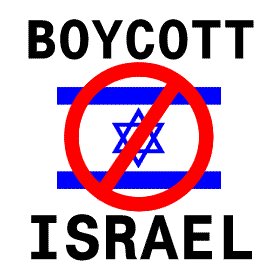
The word boycott entered the English language during the Irish "land of war" and is derived from the name of Captain Charles Boycott, the estate agent of an absentee landlords, Count Erne in County Mayo , Ireland, which has been subjected to social ostracism organized by the Irish Land League in 1880. In September of this year to protest against tenants Boycott demanded a substantial reduction in their rent. He not only refused but also ejected from the earth. Charles Stewart Parnell, in his Sermon on Ennis suggested that, rather than resorting to violence, everyone in the city should refuse to deal with him. Despite the short-term economic hardship to those who undertake this action, Boycott soon finds himself isolated from his work stoppage of workers in the fields and stables, as well as the house. Some local businessmen continued to trade with him, and the local postman has refused to deliver mail. Although the term itself was not invented until 1880, the practice goes back at least to 1830, when the National Convention Negro encouraged a boycott of products of the slave. Other examples of boycotts are their use by African-Americans during the civil rights movement America, the United Farm Workers union grape and lettuce boycott of the American boycott of British goods at the time of the American Revolution, Indian boycott of British goods organized by Mohandas Gandhi, the success of organized boycott against Jews Henry Ford in the United States, in the years 1920, the Jewish anti-Nazi boycott of German products, Lithuania, the United States, Britain and Poland during 1933, the boycott of Jewish-owned businesses anti-Semitic Nazi Germany During the years 1930 and the Arab League boycott of Israel and companies trading with Israel. In 1973, the Arab countries, crude oil has enacted an embargo against the West, see the oil crisis in 1973. Other examples include the boycott of the United States (under President Jimmy Carter) to participate in the Summer Olympics of 1980, held in Moscow the same year (in protest against the Soviet Union at the invasion of Afghanistan), the boycott of the Summer Olympics in 1984 in Los Angeles by the Soviet Union (For security reasons - stating that "the feelings chauvinist and anti-Soviet whip up hysteria to United States [1]) and further to 14 Eastern bloc, and the movement which advocates "disinvestment" in South Africa during the 1980 At the opposition in this country apartheid regime. boycott was the first Olympic Summer Olympics in 1956 with several countries boycotted the games for different reasons. "American track star Lacey O'Neal coined the term" girlcott "in the context of protests by African-American men athletes during the Games 1968 Olympics in Mexico City. Speaking of black women athletes, she said that the group would not be "girlcott" the Olympics because they were always focused on being recognized. "Girlcott" appeared in Time magazine in 1970, and later was used by the retired tennis player Billie Jean King in The Times in reference to Wimbledon to underscore its argument regarding equal pay for women players. A boycott is normally regarded as a matter of time to correct a remarkable single wrong. When extended for a long period of time, or as part of a comprehensive outreach and reforms to laws or regimes, the boycott is part of the purchase of morality, and these conditions are economic or political preference. Boycotts are now much easier to run successfully due to the Internet. Examples include gays and lesbians boycott advertisers of the "Dr. Laura" talk show, the gun owners' similar boycott of advertisers to Rosie O'Donnell's talk show and (later) magazine, and gun owners' boycott of Smith & Wesson following that company's March 2000 settlement with the Clinton administration. They can be trained very easily using either Web sites (Dr. Laura boycott), newsgroups (the boycott Rosie O'Donnell), or mailing lists. Internet boycott launched snowball very quickly compared to other forms of organization. Another version of the boycott aimed assignment or disinvestment. Narrowed assignment involves campaign for a withdrawal of investment, such as the Sudan Divestment campaign involves putting pressure on the companies, often through shareholder activism, to withdraw investment, which helps to perpetuate the Sudanese government of genocide in Darfur . Only if a company refuses to change its behavior in response to the commitment of the shareholders of the target divestment model does call for the divestiture of the company. These divestitures targeted implicitly excludes companies involved in agriculture, the production and distribution of consumer goods, or the provision of goods and services designed to alleviate human suffering and to promote health, religious and spiritual activities, or of education. In response to consumer boycotts and major multinational companies, some companies have started marketing brands which, although formally owned by the parent company, not bearing the company name on the packaging or advertising. Militants such as Ethical Consumer generate information on which companies whose own brands and products to enable consumers to the practice of boycotts or legal purchasing more efficiently. Another example of modern boycott is the blacklist of the country group The Dixie Chicks after one member made a derogatory remark about the policies of George W. Bush. Many country music stations in the United States refused to play their music because of the volume of complaints from listeners. For citizens of the United States, the antiboycott provisions of the Export Administration Regulations (EAR) apply to all "people of the United States," defined to include individuals and businesses located in the United States and their foreign affiliates. These people are subject to the law when their activities relate to the sale, purchase or transfer of goods or services (including information) within the United States or between the United States and a foreign country. This includes exports and imports, financing, forwarding and shipping, and certain other transactions that may take place entirely at sea [3].

No comments:
Post a Comment